
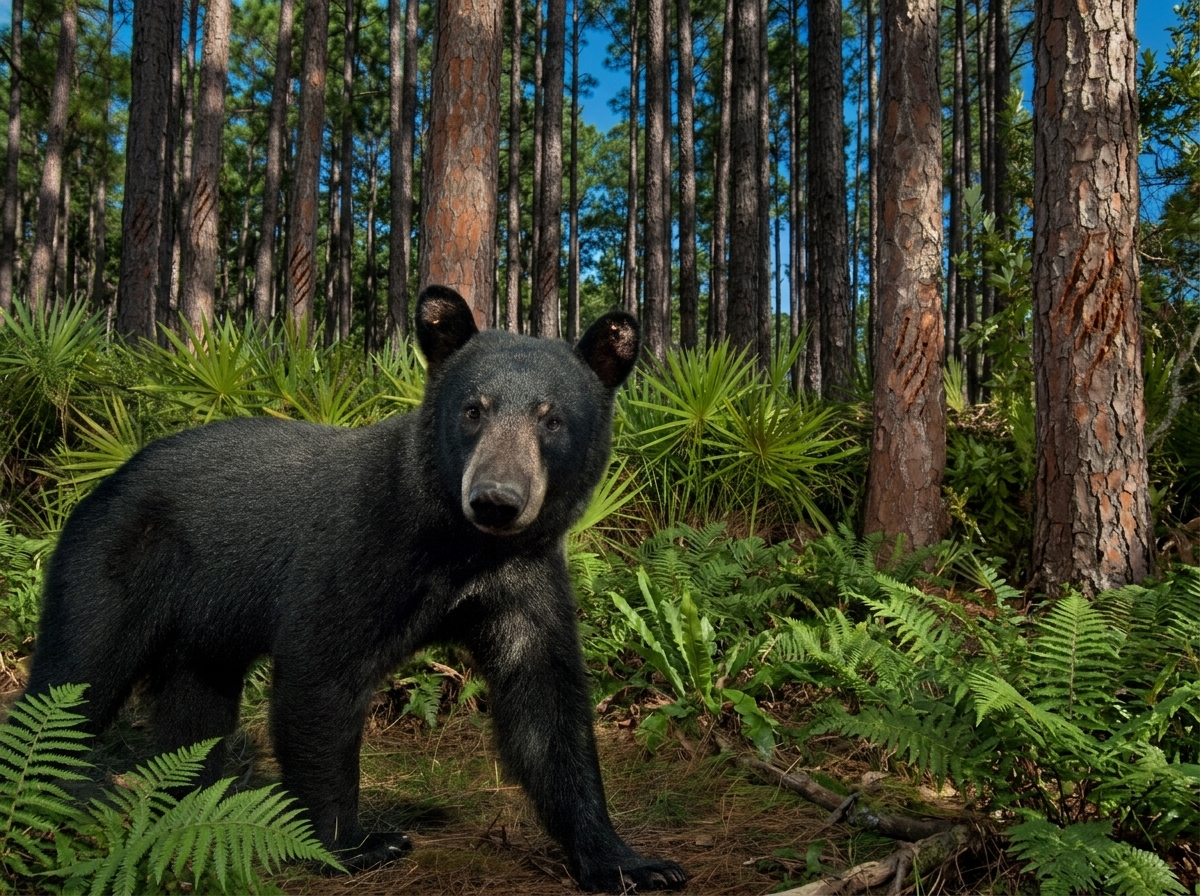
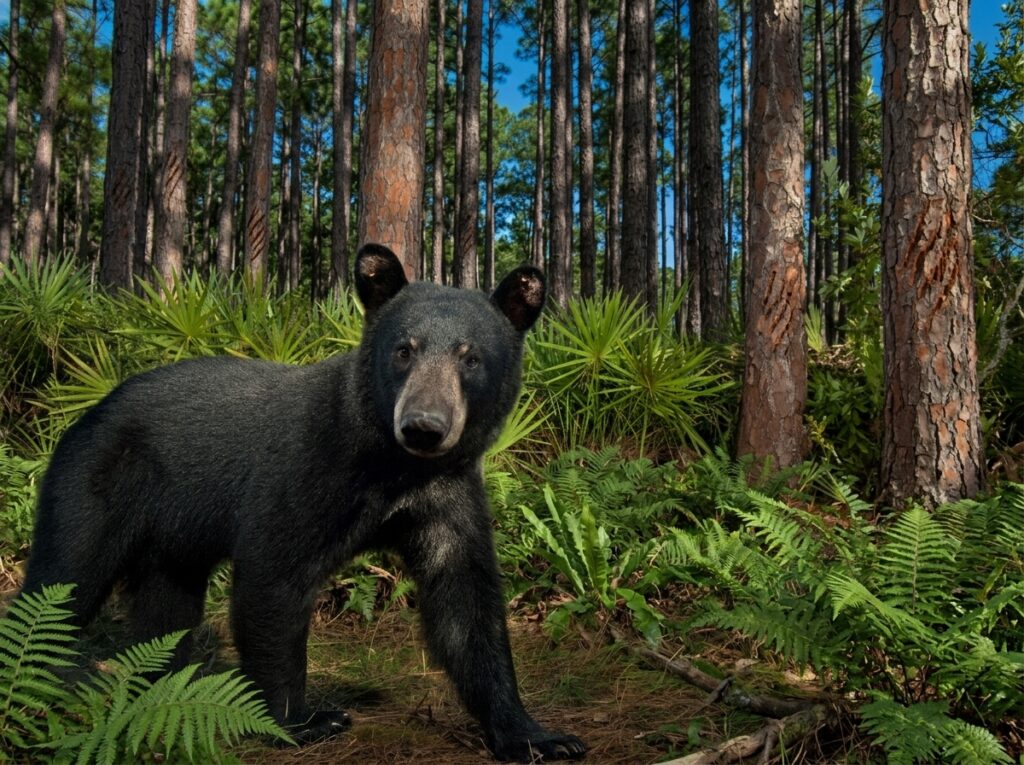
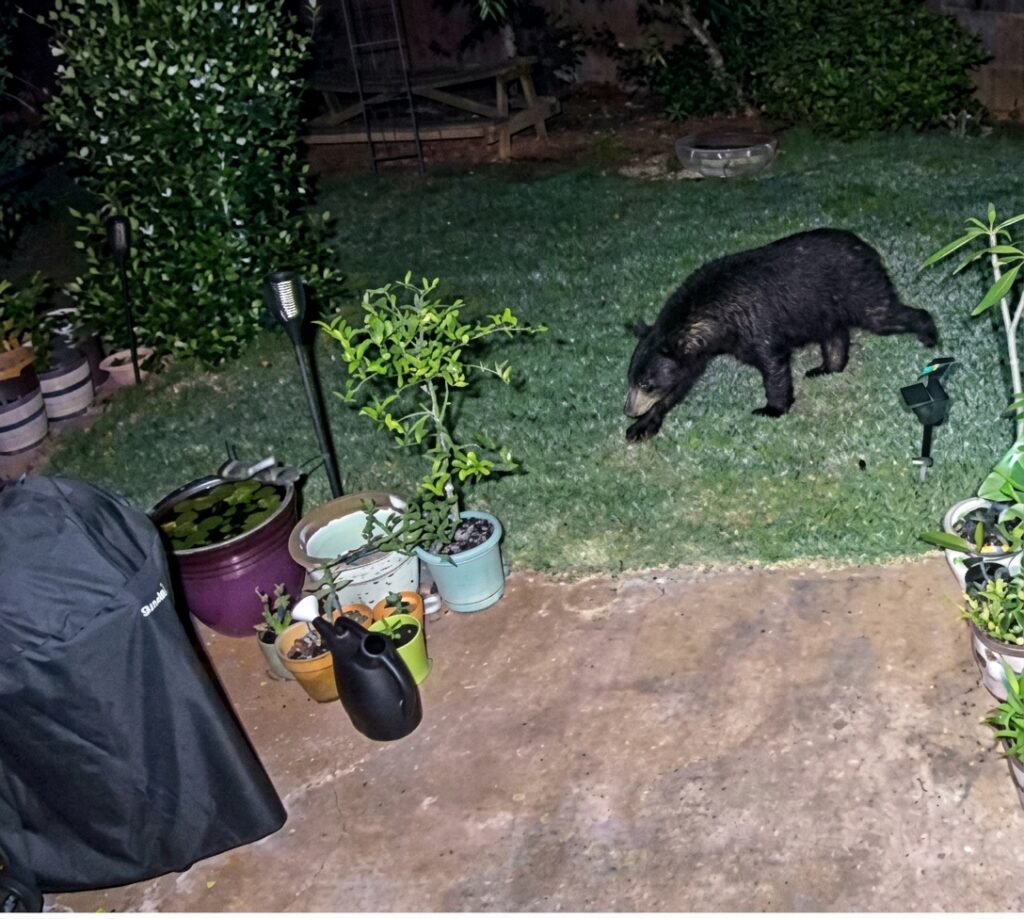
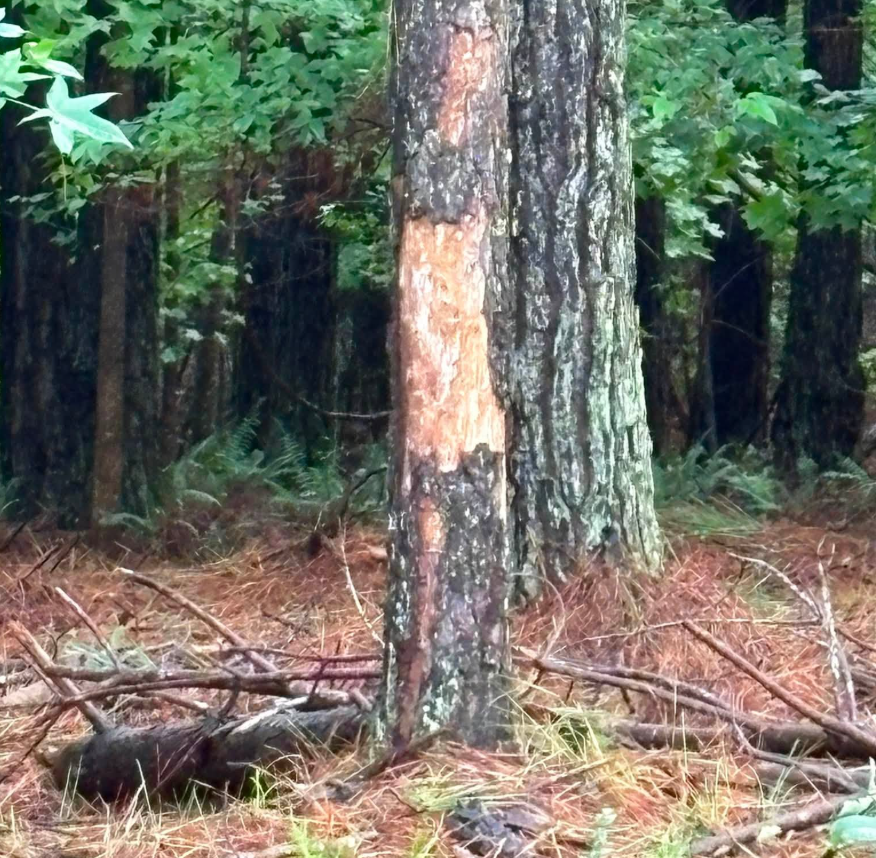
The Newnan Times-Herald featured a story when a black bear was caught on video surveillance footage in a homeowner’s backyard in the Stonebridge neighborhood. Now a Harris Court neighbor reported seeing black bear signs behind their home. Several pine trees have been “bear marked” and bear sized poop has been found.
Black bears in Georgia, like bears across North America, do claw trees as part of their natural behavior. This is not random scratching — it’s a deliberate act tied to communication, scent marking, and seasonal activities. Why do black bears claw trees?
- Scent marking: Bears have scent glands on their paws. Clawing deposits these scents onto bark, helping them mark territory and communicate with other bears.
- Territorial and mating season activity: In Georgia, marking is most common in spring and early summer (May–June) when mature males are active during the mating season.
- Communication: Claw marks, along with bites and fur caught in bark, signal presence to other bears and can indicate dominance or reproductive status.
- Maintenance and stretching: Clawing also helps keep claws sharp and may aid in stretching muscles.
Here are some tips from the Department of Natural Resources Division. If you see bear claw marks – it is an obvious sign of bear presence and activity. If you live near bear habitat, remove attractants like pet food, bird feeders, or unsecured garbage to reduce encounters. In short, Georgia black bears claw trees to mark territory, communicate, and maintain their claws, especially during the warmer months when mating and movement are most active.
Also, black bears pose a threat to pets. “Black bears are highly food-motivated and will investigate any scent they can smell, including pet food, bird seed, or garbage. Once they become habituated to human food, they lose their natural fear of people and may approach closer, including toward pets. This increases the risk of injury or even death for your animals (Fox 5 Atlanta).”
How to Submit a Bear Sighting Report
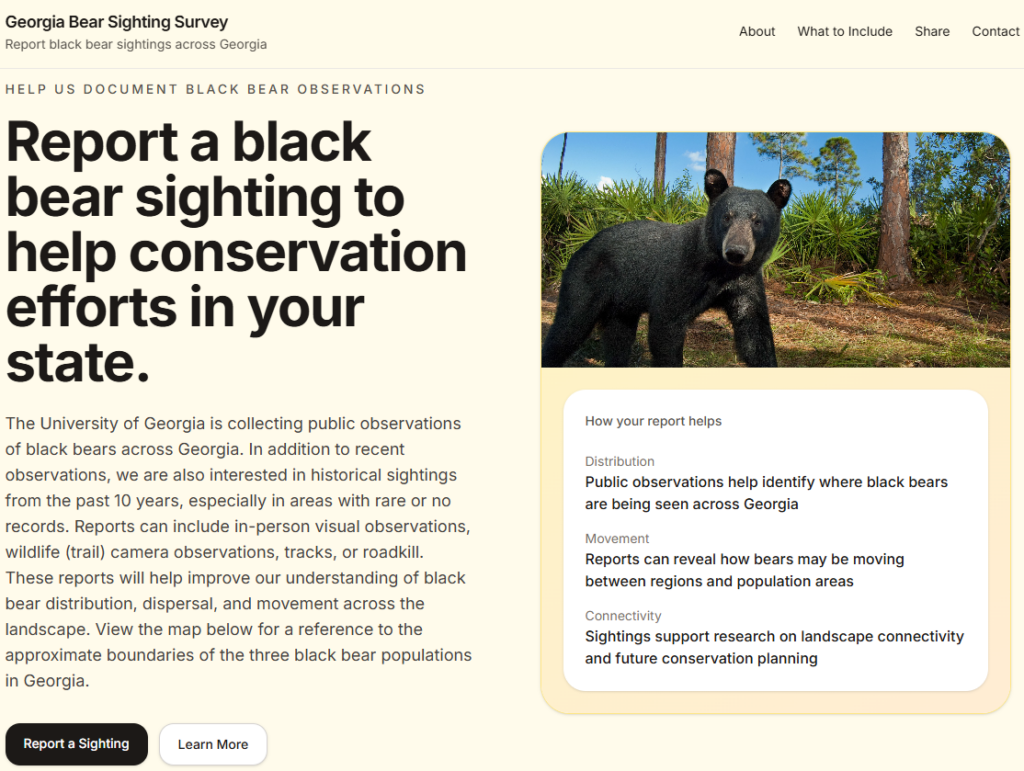
For research data: Fill out the online form via the Georgia Bear Sighting Survey with the date, location, and photos if available. Most users on Facebook agree that submitting these helps track expanding populations in North Georgia and other regions. https://georgiabearsightingsurvey.com/
For emergencies or law enforcement: Call the Georgia DNR Ranger Hotline at 1-800-241-4113.
3 responses to “Black Bear Activity”
Thanks for posting this. We haven’t seen the bear, just his markings…unfortunately we don’t have a trail cam up.
Thanks! I corrected the story. I misread a comment you made about seeing the bear.
I totally should have posted about the copperhead snakes in my backyard. I only saw 1 large one, but Mr Sanchez came across 2 additional snakes which were smaller. The relocation person said it’s possible that there was a recent birth and that babies disperse pretty quickly. He confirmed the pictures Mr Sanchez and I captured were definitely of an adult snake. I had no idea that observing a copperhead in your yard is a legitimate wildlife emergency. If you see one don’t bother calling a relocation company… there is a list of people on the DNR website. I had someone at my house in less than 2 hours. We searched the yard for several hours all the way back to the creek. No luck finding anything. He told me to text him immediately day or night if there are anymore sightings.