
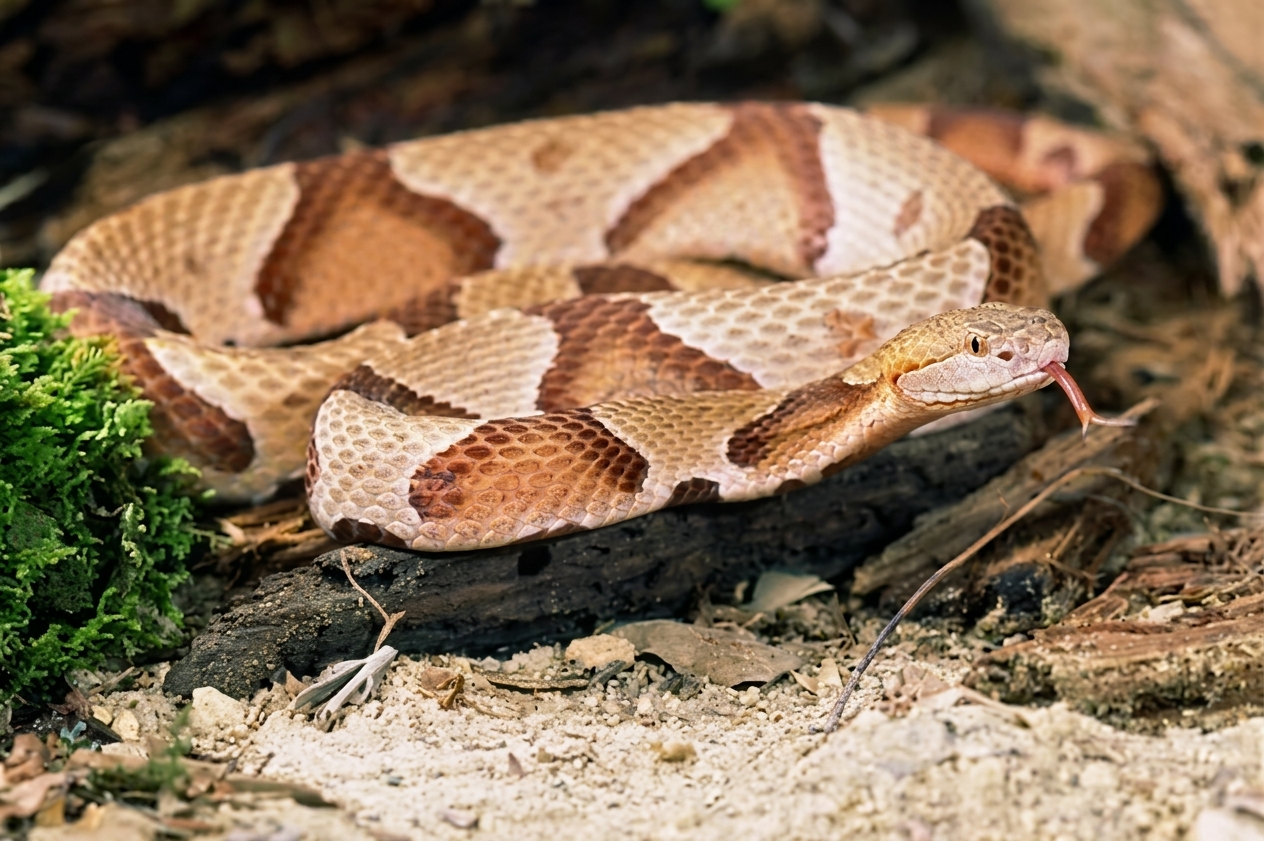
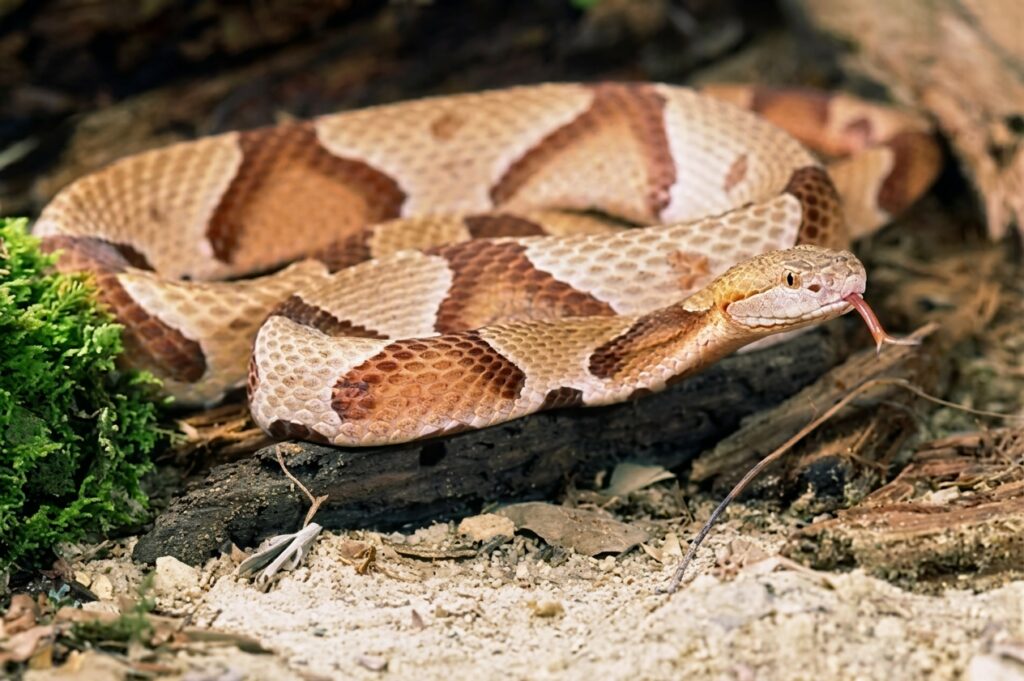
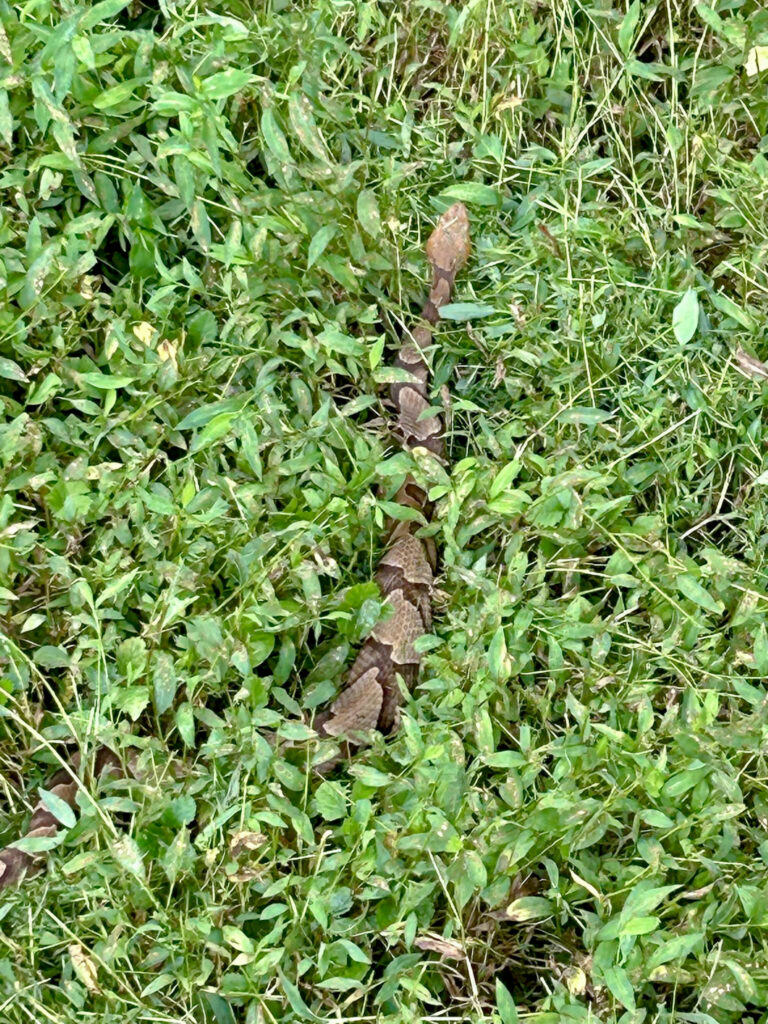
About a month ago, long-time Harris Estates homeowner Traci C, found an unwelcome animal guest in her backyard while mowing her grass. A copperhead snake that she has named Rhonda. Rhonda didn’t mind Traci and chose to slither away to safety (for everyone!! 😮).
Traci and Mr. Sanchez (our front entrance lawn care contractor) believe that Rhonda the snake is around 2-3 feet in length. That puts the age of the snake around 3-5+ years. Eastern copperheads typically live around 15 to 20 years.
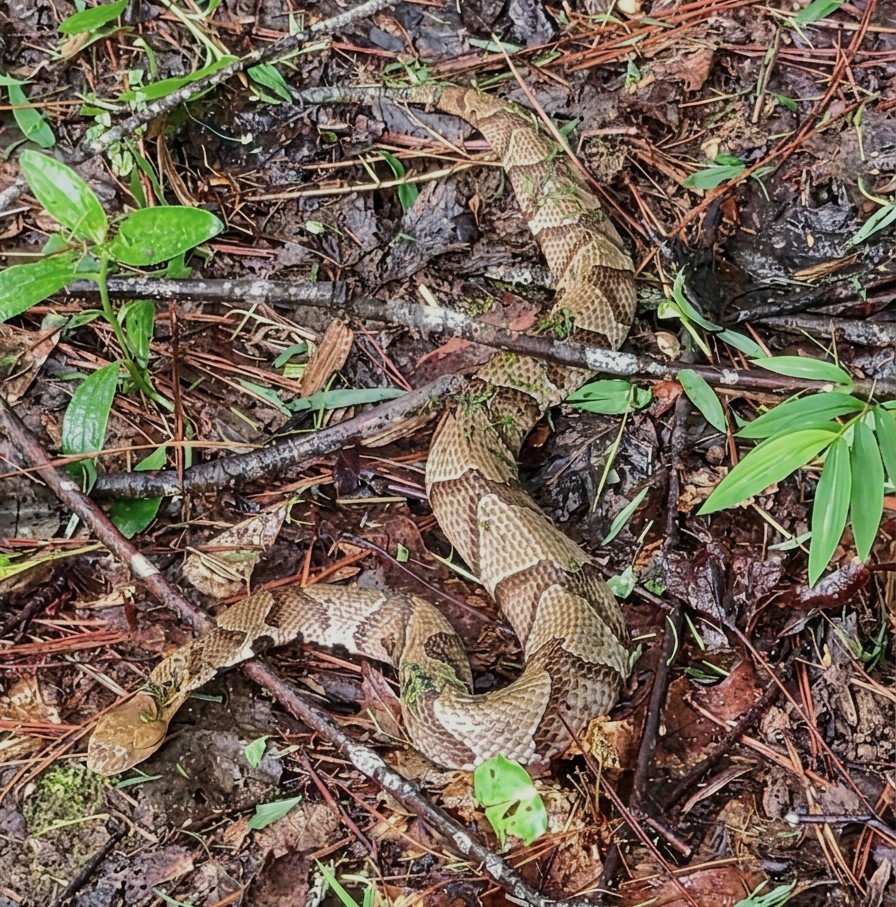
The Eastern Copperhead (Agkistrodon contortrix) is Georgia’s most common venomous snake, found in nearly every corner of the state from suburban backyards to dense hardwood forests. Known for their striking hourglass crossbands and copper-colored heads, these pit vipers rely primarily on camouflage rather than aggression to survive.
Fast Facts & Trivia 🎉
- Sulfur-Yellow Lures: Baby copperheads are born with bright yellow or greenish tail tips. They wiggle their tails like caterpillars to lure curious frogs and lizards within striking distance—a strategy called caudal luring.
- Cucumber Smell Myth: People often claim copperheads smell like fresh cucumbers when frightened. While they can release a musky scent from their cloacal glands when harassed, relying on a smell test is unreliable for identification.
- The “Freeze” Defense: Unlike rattlesnakes that issue a loud warning or water moccasins that gape their mouths, copperheads typically freeze in place when threatened. Most bites happen when a human or pet accidentally steps on one.
- Thermal Pit Organs: Like all pit vipers, copperheads possess heat-sensing pits located between their eyes and nostrils, allowing them to detect warm-blooded prey in total darkness.
What to Do If You Discover One 🫵
- Stop and Back Away: Give the snake at least 5 to 6 feet of clearance. Copperheads cannot strike farther than roughly half their body length.
- Leave It Alone: Over 70% of snakebites occur when someone attempts to kill, move, or capture the animal. Left alone, the snake will eventually move on.
- Use Water if Necessary: If a copperhead is near a doorway or patio and won’t budge, gently spraying it with a garden hose from a safe distance will prompt it to slither away.
- Contact Professionals: For relocation assistance, contact local wildlife removal services or voluntary networks like the Georgia Reptile Society.
Are They Dangerous to Pets? 🐕 🐈
Yes, copperheads pose a risk to domestic pets—particularly inquisitive dogs that nose around pine straw, brush piles, or landscaping borders where snakes hide.
- Toxicity: While copperhead venom is mild compared to rattlesnakes or cottonmouths, a bite still causes severe localized pain, rapid swelling, and tissue damage.
- Prognosis: Bites to a dog’s snout or head are common. With prompt veterinary care—which typically involves pain management, fluids, antibiotics, and occasionally antivenom—the vast majority of dogs survive.
- Cats vs. Dogs: Cats are bitten less frequently due to their agile reactions, but their smaller body mass makes any envenomation more critical.
- Emergency Steps: If your pet is bitten, keep them calm to slow the spread of venom, skip home remedies (do not cut, suck, or tourniquet the wound), and go directly to an emergency vet.
Traci came back several hours to look for Rhonda the Snake to only find that some unlikely bird 🐦 was now snake dinner. Oh – needless to say, the grass mowing responsibilities now belongs to someone else!!
Do you have an interesting story for the neighborhood? Be sure to reach out to us! 📧
Leave a Reply